



Literature writing is definitely not the sweetest part of your research, but having the best research AI tools by your side can make things much more pleasant. In this article, I want to show that AI is a great assistant when you have to complete such a challenging piece, but you have to be aware of some tips that will ensure that the process is legal and result-oriented. As a researcher, I have tried a large pool of AI helpers, and now I am ready to share this list with those who are still struggling.
What Is a Literature Review?
If you are a newbie to this type of writing, you may not understand clearly what a literature review is, what it is aimed at, and how to complete a strong piece. Thus, let me first give you a brief overview so you can realize what you are going to be working with. A literature review is a thorough evaluation of research related to a specific topic; oftentimes, this is your topic for a future research paper. The key idea of a literature review is to highlight key findings related to the issue, compare different viewpoints, identify research gaps, and demonstrate how your particular study contributes to the field.
Many students who are not familiar with this type of writing consider a literature review a summary, but actually, it is a critical thematic analysis that shows your understanding of the issue, strengthens your arguments, supports credibility with reliable sources, and helps you avoid duplicating existing ideas.
When writing a literature review, you will have to follow quite a strict path; you will have to define your topic, search for credible sources, select only relevant studies, organize them by theme, critically analyze all the findings, identify gaps or trends, and provide a research synthesis of the insights received into a logical piece that professionally supports your research focus. These are the most important parts of literature review writing, and if you miss any of them, you risk writing a mediocre paper with significant gaps, which can affect your academic reputation and the entire research.


Basic requirements from your instructor
When asked to complete a literature review, you should remember that there are some basic requirements that your professor will most likely demand, and it is crucial to understand what each is aimed at and how to meet it professionally. Now, let’s take a brief look at each of these must-dos.
- You should only use relevant and credible sources. That means that your instructor expects only the most recent, peer-reviewed, and topic-focused sources. Thus, remember to always choose academic databases and authoritative authors to ensure accuracy and academic reliability. This way, you will demonstrate strong research skills and critical source selection.
- The structure must be clear and well-organized for comprehensive browsing. Your literature review should follow a logical flow; it can be thematic or chronological. Mind that clear transitions and coherence will help your readers understand relationships between studies and the overall research.
- Your reviews must sound like a critical analysis, not a summary. You will have to produce a literature review methodology, compare findings, highlight strengths and drawbacks, identify gaps, etc., because instructors look for interpretations rather than descriptions.
- You will have to provide a proper citation and use an academic style of reasoning. Accurate referencing is essential when you are working on an academic paper. Thus, even when working on a literature review, remember to maintain an academic tone and make sure your review is plagiarism-free; this will demonstrate your professionalism and respect for intellectual property.
- Present the connection to your research purpose. Finally, your review should support the key question of your research paper. Your literature review must be a focused discussion that will show how existing studies support your research as well as justify the academic significance of the issue being examined.
How AI Can Support the Literature Review Process
Today, students can use AI for literature review writing and delegate various routine tasks to it in order to save more time and energy for critical work. Many learners are still afraid of using AI in academic research because of academic integrity rules, but rest assured that if used smartly, these tools are perfect assistants that can do a lot of troublesome work for you. So, let’s see how AI can come in handy when working on a literature review.
- It can help you find relevant sources for your research. AI tools can easily suggest some relevant scholarly articles, books, and journals related to your central issue.
- Summarising and filtering large papers. AI tools can browse all the materials discussed in studies of different volumes and provide you with brief summaries of the key ideas presented.
- It can help you find a research gap for discussion more easily. AI is a great tool to quickly analyze multiple sources and spot under-researched areas that you can cover in your own study.
- AI can help brainstorm different angles of a research project. This way, you will see how you can effectively refine the focus of your literature review.
- AI can help you express things clearly, sticking to the original ideas. It means that you needn’t worry about how clearly you have delivered your ideas; the AI can help you make things understandable based on the concepts from the research you have used.
- AI can help you with proper referencing. You can delegate creating accurate references in required formats like APA or MLA to AI tools in order to be sure you have composed them correctly.
- Editing is no problem when you have an AI assistant by your side. You can use AI to check your writing for grammar issues, detect plagiarism or AI content, and refine the comprehensiveness of your work in a few clicks.
- Manage your time effectively with AI. By applying AI tools, you can save yourself a lot of time and focus on critical analysis rather than, for example, referencing each source manually.
What AI Cannot Replace in a Literature Review
I have explained how to use AI tools for literature review, but it is important to highlight the fact that AI tools still have some drawbacks which can affect the final result. Now, you know what it can help you with, but also take a look at the things that AI usually struggles with.
- Critical evaluation and systematic review interpretation are not the strongest sides of AI tools. Assessing the strengths, limitations, and applicability of various theories is a nuanced task that AI cannot reliably perform, so you had better dedicate some time to dealing with these questions yourself.
- It is not recommended that you delegate methodological judgment to AI. Unfortunately, AI might overlook or misrepresent significant segments of the material, so it is highly recommended that you do this stuff manually and apply your critical thinking skills.
- Do not rely fully on AI for theoretical framing. Deciding which framework best fits a certain research question requires a deep understanding of theory and context, and these are skills that AI still lacks. Human researchers usually connect theoretical perspectives to their own analysis.
- AI is unlikely to provide you with a reasonable synthesis. AI may struggle with combining insights from multiple sources into a coherent argument with a personal academic perspective.
The Best AIs for Literature Review by Research Task
Knowing how beneficial AI can be for your literature review writing, you likely want to know what the best AI for literature review writing tools are. For some years, I was working on research papers on different topics, and today, I have created a list of the best AI for research papers that helped me so much.
| Tool | Overview | What makes it stand out? |
|---|---|---|
| AI Tools for Finding and Organizing Sources | ||
| Semantic Scholar | Meet a free AI search engine that can help you find scholarly articles easily. It runs machine learning and recommends relevant papers based on your topic. | 💪 AI paper summaries (TLDR) 💪 Filters by field, date, and author 💪 Personalized research feeds 💪 Citation counts |
| Connected Papers | Use it to effectively map how research papers are related and explore the literature around your topic. Starting with one key paper, the AI can build a network of connected works so you can spot emerging research. | 💪 Citation-relationship graphs 💪 “Prior” and “Derivative” paper views 💪 Identification of research directions |
| Zotero | Grab this free software to collect and cite sources in your research. This is not just an AI app; the platform offers plugins that enable smart search and semantic discovery within your library. | 💪 Auto-organizing metadata 💪 AI search plugins |
| AI Tools for Summarizing Academic Papers | ||
| Elicit | Let this tool help you automate literature reviews as well as evidence synthesis. The tool can browse millions of scholarly pieces to help you extract insights for effective research summaries. | 💪 Tables for comparison 💪 Exporting results and data extraction |
| SciSpace Copilot | With this AI assistant, you can interact directly with research documents. Ask questions, get explanations, and explore context inside PDFs to understand complex academic content more easily. | 💪 “Chat with PDF” for detailed Q&A 💪 Extraction of methodologies and results 💪 Explanations of technical language and tables 💪 Multi-language analysis |
| Textero | The Textero literature review tool is known for its high-quality literature analysis features tailored for academic writing. It can generate summaries and structured outlines while respecting citation formats. | 💪 Instant summaries 💪 Keyword mapping 💪 Review outlines 💪 Various formatting styles and academic subjects |
| AI Tools for Identifying Themes and Research Gaps | ||
| ResearchRabbit | Use this tool to explore how various academic papers are connected. It builds maps from seed articles and helps identify underexplored areas. | 💪 “More like this” suggestions 💪 Identify clusters and sparse connections 💪 Organize and annotate papers |
| Litmaps | This tool helps build interactive maps of academic literature starting from one or more key papers. Reveal trends and gaps in existing research. | 💪 Timeline citation visualization 💪 Discover related work 💪 Monitor new papers on your topic |
The Cases: How Researchers Use AI in Literature Reviews
In this section, I want you to take a look at some ideas on how different researchers can use AI to create strong literature reviews. So, if you are still wondering how to apply AI tools when working on your literature review, proceed with reading and see it in practice.
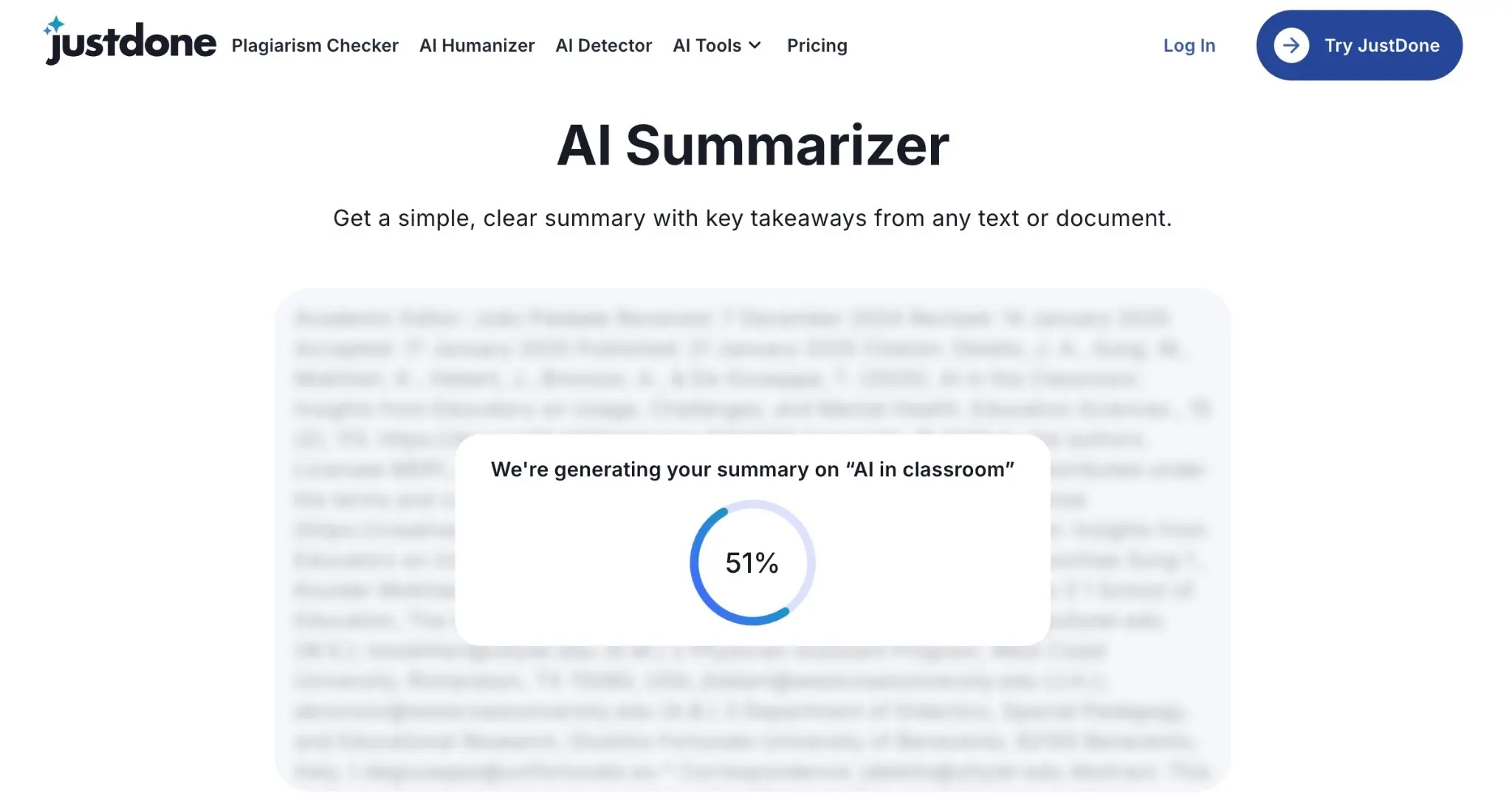
Case #1: An undergraduate student works on a literature review
A student begins a literature review by defining their topic and research question. Then, they use AI to find and summarize relevant articles and organize them thematically. Finally, the student critically analyzes the findings themselves and connects relevant insights to their study, at which point AI helps with the citations and formatting, helping the student complete the work by the deadline and dedicate enough attention to the main parts of the literature review.
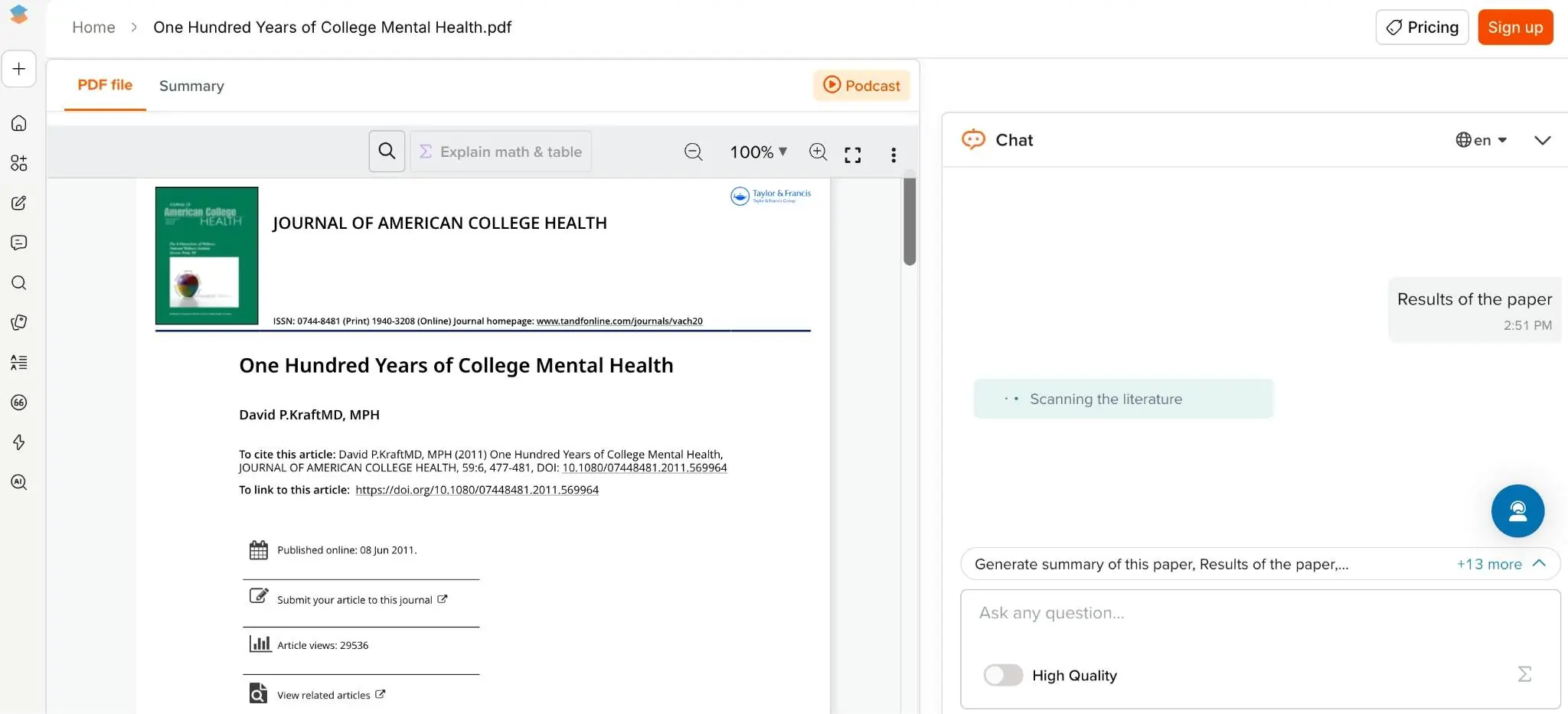
Case #2: A student crafts their Master’s thesis
A student reads foundational studies and finds the core theories. They use AI to identify recent publications and trends. Then, the student asks AI to paraphrase complex passages and draft summaries but evaluates and synthesizes the sources independently. This way, the student produces a coherent narrative and a strong theoretical framework based on the most recent sources collected by the AI.
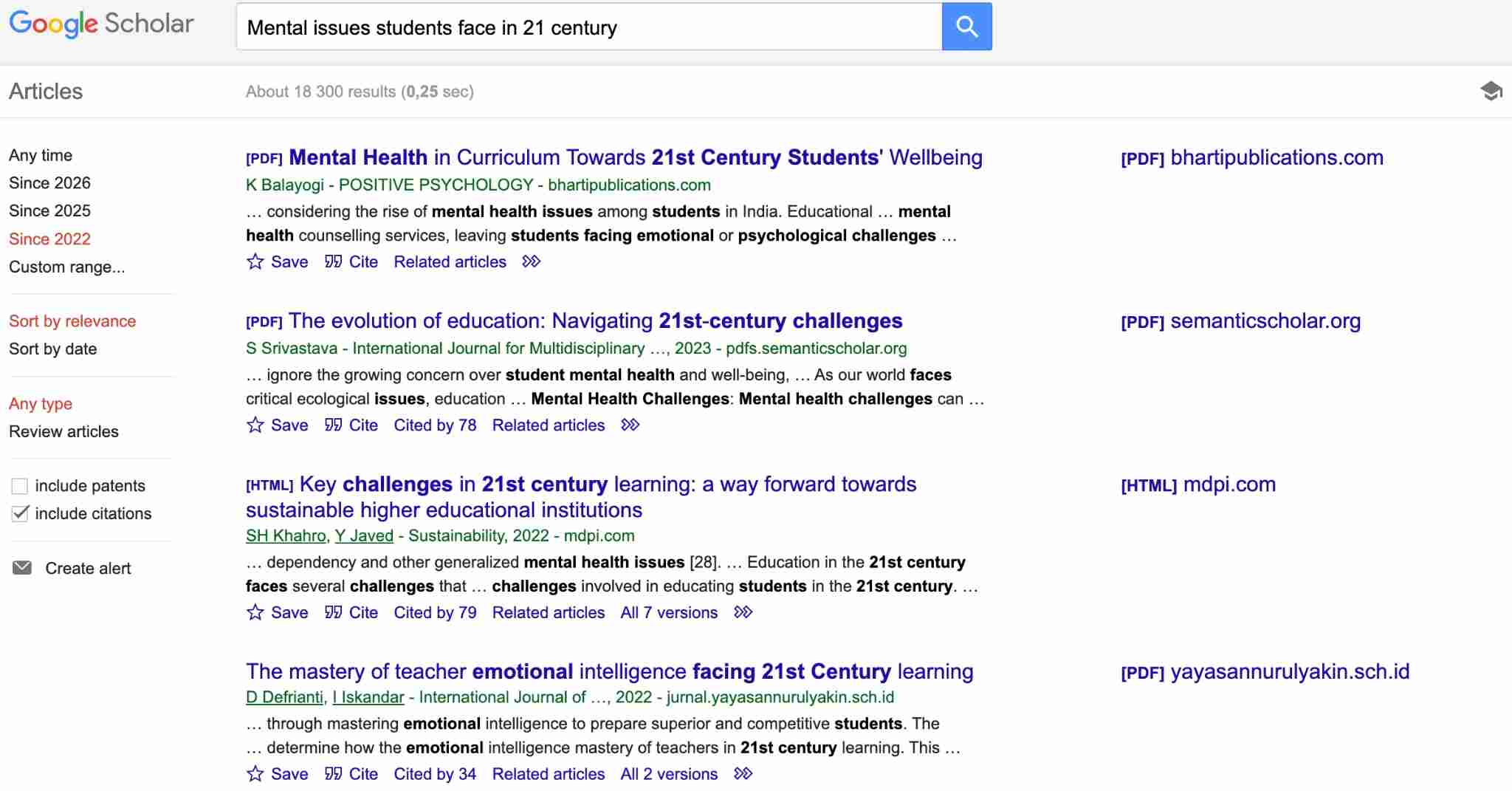
Case #3: A first-time researcher works on their project
A researcher lists their research objectives and searches databases. Then, they ask AI to generate a summary of various papers and highlight potential gaps that could be addressed. The researcher reviews these summaries and critically selects the most relevant studies. As a result, the researcher works on a project that integrates all the findings and offers their own analysis and argumentation.
How to Use AI for Literature Review Responsibly
Using AI is not prohibited, but it is essential to understand how to use these helpers properly and get the most help possible. So, here are some rules that you have to always keep in mind in order to be sure you have not neglected the requirements of academic integrity when using AI for your literature review composition.
⚠️ Use AI as a support tool, not a replacement
Let AI assist you with summarizing or suggesting sources, but remember that the critical evaluation and arguments are your own responsibility.
⚠️ Verify all AI-generated content manually
It is essential to always cross-check facts and other pieces of data from original sources in order to avoid errors and misinterpretations, which are very common issues that AI tools struggle with.
⚠️ Maintain academic integrity
Never submit AI text as your own! Instead, you have to paraphrase, cite, and ensure originality. You can use various tools to check the final draft for AI or plagiarized content in order to be 100% sure you are going to hand in content that is totally unique and sounds personalized.
⚠️ Apply your judgment in analysis
Remember that AI can suggest patterns or trends, but assessing relevance and theoretical connections requires human insight. So, ask AI to do the routine work for you and get enough time to provide quality analysis.
⚠️ Use AI for efficiency, not shortcuts
It is okay to use AI for brainstorming, generating citations, or drafting a structure for your literature review, but you have to invest your own effort in deep reading and critical thinking.
I hope this article, with all the examples and AI tools explained, has been really helpful, and now you know how to apply AI to your literature review writing and get the most out of this cooperation. Good luck!




 Built-in AI detector