


Modern technologies never cease to amaze us. With all the support we have access to today, we can do anything. Ads with ideas on how to earn money with AI are everywhere, students can’t imagine their academic routines without academic AI tools like ChatGPT and co., and the times when children ask their parents, “How did you survive without AI?” are becoming more common.
The main focus of my work as a content editor and researcher is academic writing, and for many years, I have been trying various tools and types of AI software. Now, I share all my knowledge with those who want to implement modern technology in their research. In this piece, I wish to draw your attention to OpenAI Prism.
OpenAI Prism Explained: What Is It?
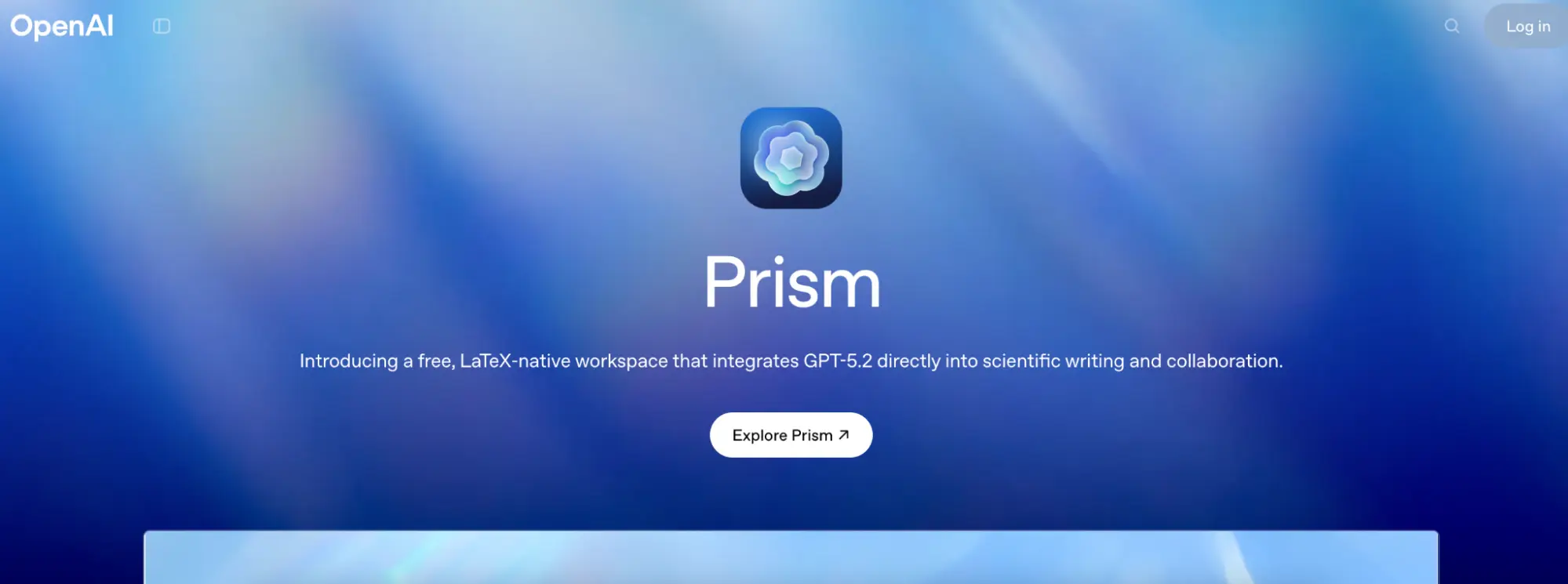
So, the main question that’s likely to come to your mind is “What is OpenAI Prism?” You may also be wondering how OpenAI Prism works. This is a popular AI for making writing feel a lot less overwhelming. With OpenAI Prism for research, you can easily draft and polish papers in one place. The platform offers a large number of support tools, so you will not have to switch between different essential assistants to get everything done. The target audience is researchers, scientists, graduate students, etc., who deal with complex papers and want a less stressful process.
It is wise to consider Prism a writing partner that offers collaboration and keeps your project organized from A to Z. You can delegate the technical and repetitive parts of writing to it and free up time and energy to focus on your ideas and significant discoveries. If you are looking for a tool to make your academic research feel more comfortable and even a bit enjoyable, this is the one that can meet these needs.
Why Working With Scientific Papers Is Challenging
If you have ever worked with a scientific paper, I bet you know all the pain it can bring. Unfortunately, many people who have never faced all the requirements, citations, tons of sources, etc., oftentimes can’t understand us, those who have suffered. Thus, if you are one of those who have no idea why we are screaming so loudly when working on a research paper, take a look at the features that make this type of writing ‘special.’
- Volume. Scientific papers are large pieces that contain background research, data, scientific literature analysis, etc. Managing all this stuff can feel overwhelming, especially when multiple sources must stay consistent and accurate.
- Complex terminology. Another aspect is the fact that academic writing relies on specialized terms and field-specific language that can be challenging to use correctly. One small misunderstanding can change the meaning of the entire argument and make precision stressful for both new and experienced researchers.
- Structure. Scientific papers must follow strict structural rules with little to no room for creativity. Each section must serve a clear purpose, and even if you present strong ideas, they can be rejected if they are organized in the wrong way.
- Time. Research can be extremely time-consuming. First, you have to gather sources, analyze data, write drafts, and revise for clarity and formatting, which can take weeks or even months. And the icing on the cake is the deadline as well as other academic responsibilities.
- Guidelines. Researchers must remember that every journal and institution has its own strict submission guidelines covering structure, formatting, citations, and length. Adapting a paper to meet these rules often requires multiple revisions. As a result, the final preparation stage can be pretty stressful.
- Citation accuracy. Academic work demands perfectly formatted references. A small mistake, be it a missing page number or wrong style, can lead to credibility issues, rejections, or even accusations of plagiarism.
- Language. Finally, scientific papers must sound objective and professional. Maintaining the right academic tone while avoiding grammar mistakes can be quite challenging as well. Actually, there are a lot of foreign students worldwide, and for them, this can be a real challenge, but from the perspective of academic institutions, there is no excuse, even if you are a non-native speaker.
How OpenAI Prism Supports Academic Research
So, can OpenAI Prism come in handy for academic writing? I have already answered this question in some manner, but I still want to highlight how OpenAI Prism for researchers can be useful.
- Understand key ideas. Use the tool to quickly grasp core arguments and logic within complex papers. This is one of the research comprehension tools which can highlight main points and support better comprehension without changing the content of the original research.
- Summarize content. Prism can provide you with briefs from lengthy articles, sections, or notes, so you can read these summaries and review findings faster.
- Navigate unfamiliar research spheres. The tool also makes the exploration of new fields easier. It can explain unfamiliar terminology, concepts, and methodologies in simple language.
- Connect related concepts. See the relationships between the ideas, methods, and findings in a single paper or across multiple sources. This way, you can understand the landscape and follow complex academic discussions much more easily.
Common Use Cases for OpenAI Prism
Actually, OpenAI Prism is an AI helper that can not only assist with academic issues but also support any type of research you want to run.
- Understanding academic literature. Read any source faster with the help of a summary or learn about key findings across multiple papers.
- Research. Get help to understand methodologies, interpret complex explanations, and organize insights. With OpenAI Prism for scientific papers, getting stuck on technical confusion becomes less likely.
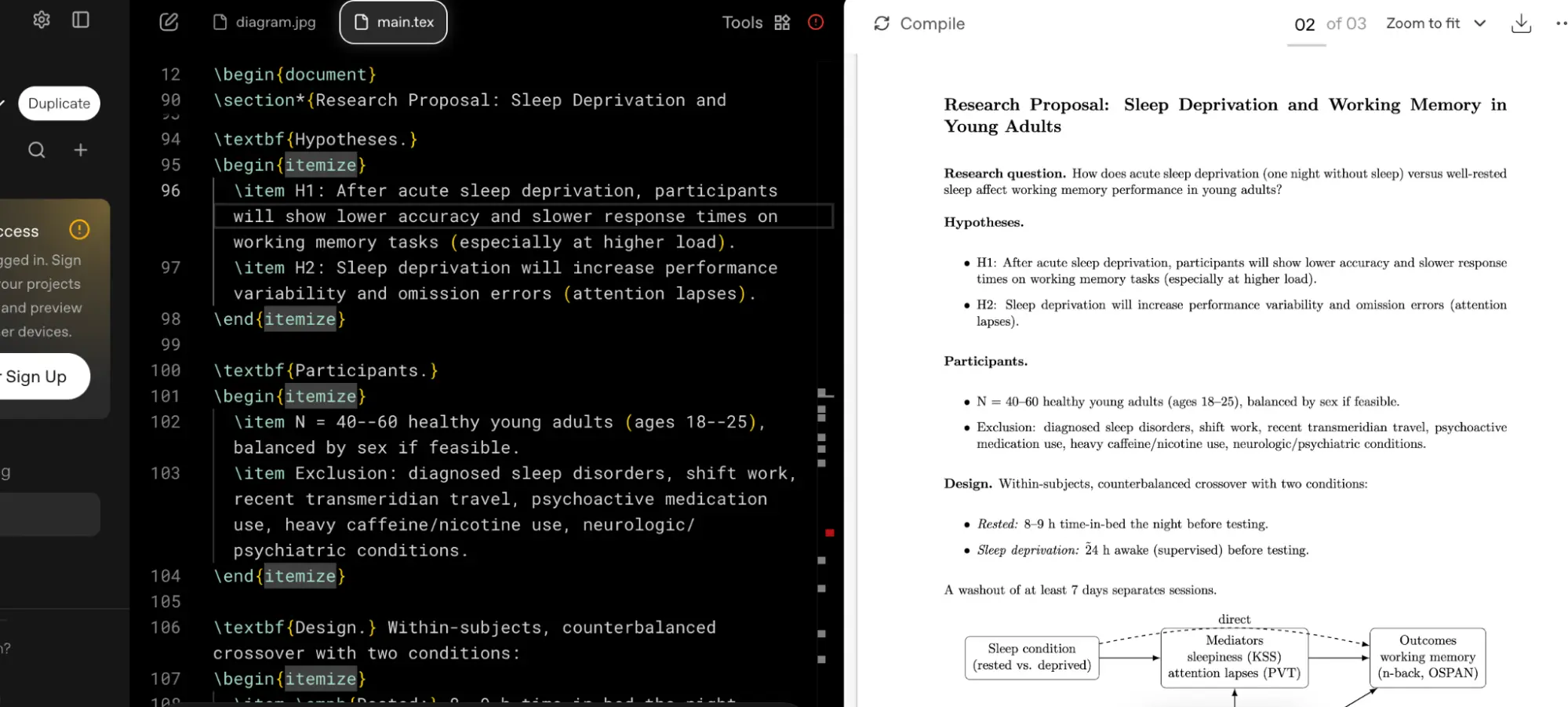
- Paper proofreading. You can easily review your drafts to improve clarity, check consistency, and spot structural or logical issues. Keep in mind that this is an essential step that researchers have to take before submission.
- Collaboration and feedback. If you want teamwork, this tool offers the option to share documents, enabling collaborators to quickly grasp key points and stay aligned throughout the course of the research.
OpenAI Prism Compared to Other Academic AI Tools
Of course, there are some alternatives which I have already discussed in my reviews, including Textero.io, SciSpace, and many others. Let’s briefly take a look at them and see what they can offer and how they differ.
| Tool | Purpose | Typical use | Focus area |
| OpenAI Prism AI | A tool powered by GPT‑5.2 that helps with drafting, editing, and collaboration in one place. | Researchers and academic teams write and revise papers, manage equations, and collaborate in real time. | The tool integrates AI directly into documents (LaTeX native) and supports scientific writing with structure, clarity, literature searching, and teamwork rather than just generating content. |
| Textero | An AI assistant that helps students find, analyze, and organize sources from a large database to support their writing and literature review. | Input a topic and receive suggested sources and a personal library for later reference. | The tool is a perfect assistant for research comprehension and source discovery, so you spend less time hunting for references. |
| SciSpace | An AI platform that enables interaction with research papers. | Search for relevant sources, upload PDFs, ask detailed questions, and get key insights from any piece. | The main focus is on literature review and the in-depth understanding of research papers. Users can enjoy various explanations, key findings, and contextual Q&A. |
| NotebookLM | A personalized AI assistant that helps you understand your own documents better. | You can upload documents and then ask questions, generate summaries, and extract key insights. | The tool is for the synthesis of your own research, rather than external web data. |
| Paperpal | Meet an AI academic assistant that supports reading, summarizing, and improving research writing from start to finish. | The tool can summarize articles, check grammar and citations, provide insights from files, and refine content for clarity. | The tool combines academic paper summarization, language refinement, and citation tools. |
How Textero compares to OpenAI Prism
One of the most similar tools, in my personal opinion, is Textero. Having used both alternatives, I can share some insights concerning their features and differences.
| Feature | Textero vs. Prism | |
| User-friendliness | For me, Prism is quite a challenging tool to use for research papers in specific disciplines, like Math, Chemistry, Biology, Physics, etc., especially for non-technical students. At the same time, Textero is a comfortable tool for working on simpler research papers. | |
| Citations | Prism and Textero work with the same libraries, and both provide good citations from trusted sources, but for me, Textero makes working with citations simpler. | |
| Academic focus | Textero is mostly academically oriented for college and university students who want to make their lives simpler while getting quality assistance. Textero also offers numerous support tools that can help you find references for research papers, summarize docs, etc., and it seems a bit easier for college learners. | |
Prism’s Limitations Explained
As I mentioned in the beginning, Prism is a good tool, but it still has its pitfalls that you should be aware of before you start using it. Here are some that I noticed for myself.
- Not every student works with LaTeX. The OpenAI Prism tool is LaTeX-native, so students unfamiliar with the technology may struggle with its features. This can potentially slow their progress at some points.
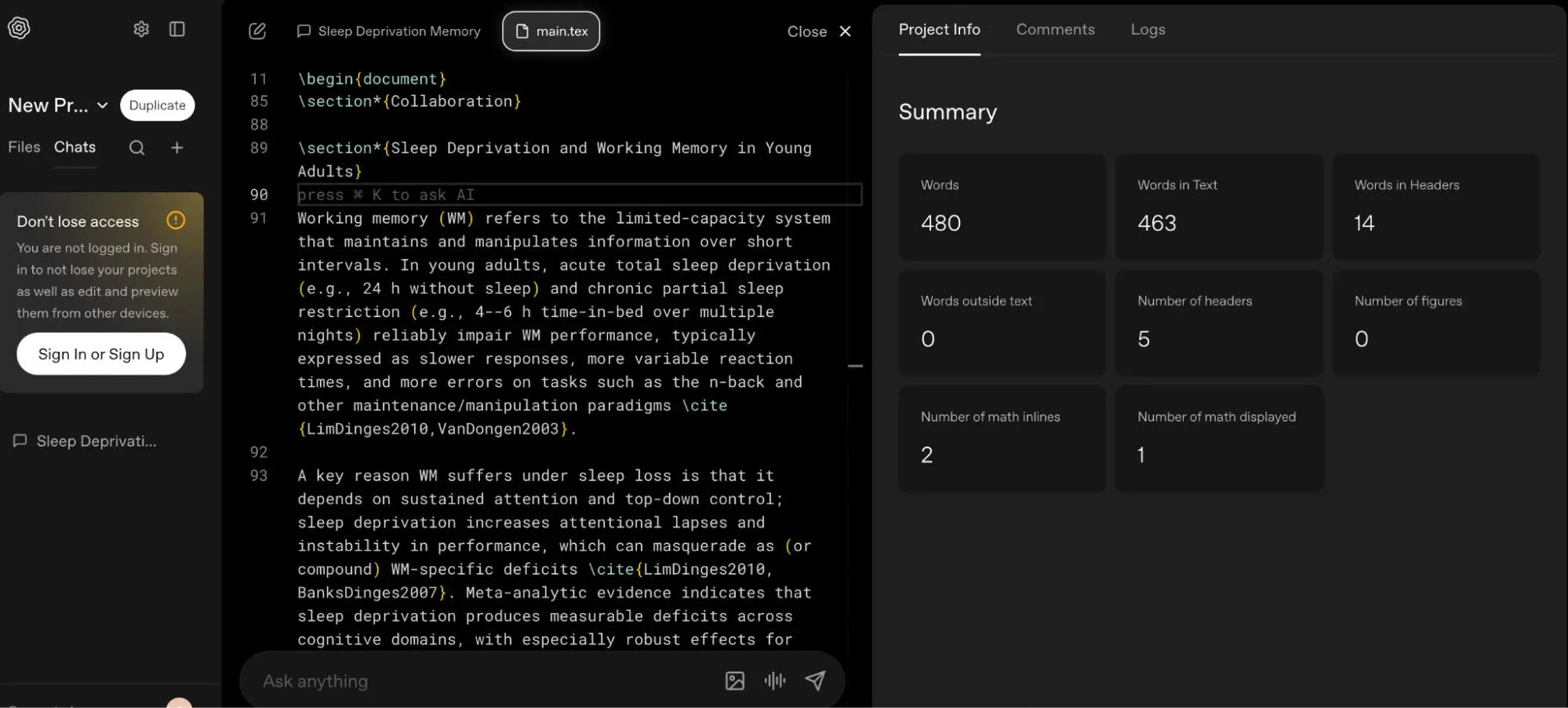
- It is not a replacement for reading full papers. Prism can help with content creation, but blind reliance on it may lead to misunderstandings. Therefore, double-checking is always required.
- It is not a source of original research. Prism supports writing, but it cannot produce new findings, so you will still have to conduct experiments on your own.
- It requires user judgment and domain knowledge. As with any AI suggestions, Prism needs critical evaluation. Misunderstanding context can introduce errors, so it is highly recommended that you actively apply your expertise to verify accuracy.
Bottom Line
OpenAI Prism is a great tool that can help you compose strong research, but still, you have to be ready for the fact that it will require some effort and energy to understand all the nuances. If you are working on a simpler research paper for your college class, for example, there are a lot of alternatives, like Textero, that offer more comfortable and user-friendly interfaces. I hope this review was helpful, and see you in the next posts.




 Built-in AI detector