


Over the past two years, I’ve personally worked with dozens of academic AI tools and rewriting tools to understand which ones actually support student learning.
This review is for students who want real guidance without that annoying marketing hype you can usually see on the landing pages of platforms that focus on AI for writing papers. If you’re looking for tools that help with research and writing rather than just generating content, this is for you.
I’m not going to pretend every AI tool is wonderful or that using AI for academic writing is easy and smooth. Instead, I’m sharing the tools I’ve found that offer legitimate support for organizing research and improving your own work while keeping you on the right side of academic integrity policies.
What Makes an AI Tool Suitable for Academic Writing?
Most AI tools flooding the market right now are completely unsuitable for academic work, and understanding why will help you clarify what to look for.
Academic tone vs marketing copy
The first and most obvious issue is that many AI tools are trained primarily on web content, such as blog posts, marketing copy, and news articles.
General-purpose AI tools like Jasper and Copy.ai generate content that sounds professional but lacks the specific characteristics of academic prose: engagement with scholarly debates, appropriate citation practices, etc.
Structure and argumentation
Throughout my testing period, I noticed that AI-generated content lacked the logical progression and sustained argumentation that college-level work requires.
Rewriting vs generating
With rewriting tools, you’re still doing the intellectual work of research, analysis, and argumentation but working together with an effective AI research assistant who can guide you in the right direction.
Generation tools, by contrast, do the thinking for you. When you input a topic and receive a complete essay, you’ve outsourced the entire learning process.
Citations and sources
Academic work requires proper attribution of sources, and this is where most AI tools catastrophically fail. During my extensive testing, I’ve encountered three major problems with AI tools for writing research papers:
- They fabricate citations, confidently cite studies that don’t exist, misattribute quotes to the wrong authors, or provide incomplete or incorrect bibliographic information.
- Even when AI tools for academic writing provide real sources, they often misrepresent what those sources say.
- Most AI tools have no mechanism for actually accessing and reading sources and can’t help you find relevant scholarly sources or synthesize multiple perspectives from current literature.
Even though a citation generator might help you overcome these problems, it still isn’t the ultimate solution for students who want to have all the necessary functions in one tool.
Therefore…
After testing dozens of tools, I’ve concluded that the vast majority are unsuitable for academic writing because they’re designed for the wrong purpose.
The best AI tools for academic writing I recommend below are the rare exceptions that have specific features to support rather than replace academic work.
How I Tested These AI Academic Writing Tools
I didn’t just create accounts and click around for five minutes with each tool. Over the past couple of weeks, I’ve used these AI assistants for the kinds of real academic writing tasks that students often need help with.
Types of tasks I tested
I tested platforms that rely on AI for scientific writing across several common scenarios:
- Essay drafting and outlining. The goal wasn’t to have them write my essays but to see if they could help me plan and organize my own writing more effectively.
- Paraphrasing and source integration. I tested how each tool handled paraphrasing passages from academic articles.
- Rewriting for clarity. I fed each tool paragraphs I had written myself that felt repetitive or unclear.
- Structuring ideas and overcoming writer’s block. I tested whether these tools could suggest organizational approaches or provide frameworks for developing arguments without simply writing the content for me.
What disqualified tools
Several factors immediately disqualified tools from my recommendation list, regardless of how well they performed in other areas:
- Fabricated citations. I found this problem shockingly common, as tools would confidently cite studies that don’t exist.
- Explicit marketing as “essay writers”. I disqualified tools that positioned themselves primarily as services that write essays for you rather than help you write your own literary pieces.
- Inability to maintain academic tone. I crossed out the tools that consistently produced content that was too casual, too verbose, or inappropriately confident in making claims from my list of the best AI for academic writing.
- Inaccurate or misleading content. There’s no sense in using tools that present you with factually incorrect information or make misleading statements about research findings.
The Best AI Tools for Academic Writing (Reviewed)
After weeks of testing, these are the best AI for writing academic papers I actually trust and would recommend to students who want legitimate support without crossing ethical lines.
| Category | Tool | Why I chose it |
| Best overall AI for academic writing | Textero | An all-in-one tool that helps with drafting, rewriting, improving structure, andmaintaining an academic tone |
| Best AI for academic paraphrasing | QuillBot | Has several modes and preserves the initial meaning after paraphrasing |
| Wordtune | Focuses on sentence-level improvements | |
| Best AI for research assistance | Consensus | Effectively helps you find and evaluate scholarly sources |
| Semantic Scholar | Identifies the most influential papers and shows citation networks | |
| Best AI for editing and clarity | Grammarly Premium | Does a great job at improving writing clarity and catching errors |
Now, let me describe the main advantages and limitations of each tool in more detail.
Best Overall AI for Academic Writing
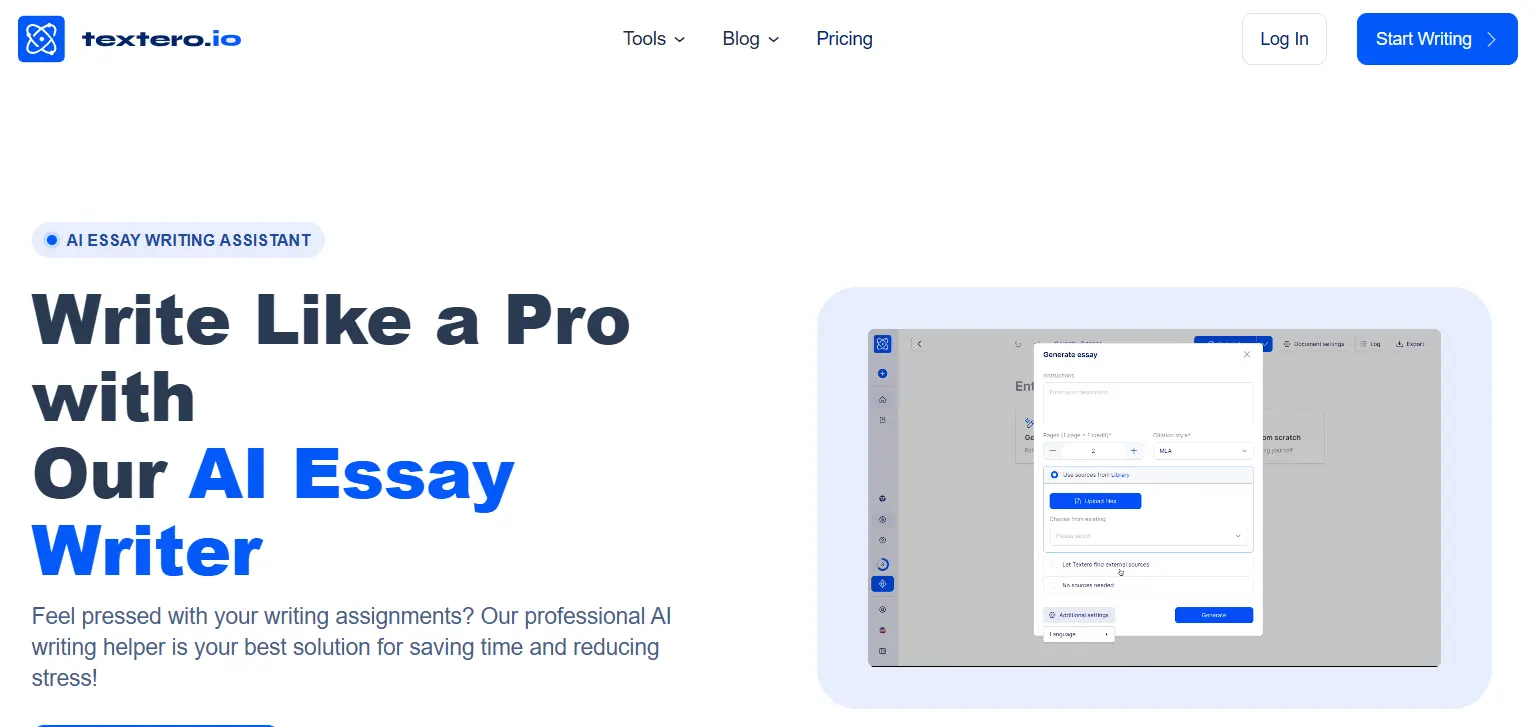
I chose Textero as the best AI for writing papers primarily because of its fundamental design philosophy: it’s built to support your research and writing process, not replace it. Instead of generating essays, Textero helps you develop research questions, structure your arguments, organize your sources, and overcome specific writing challenges.
On top of that, you can use it to rewrite passages that lack clarity or don’t sound convincing enough. As a former student, I remember how frustrating it can be to spend hours editing one page of your paper to make it meet your institution’s strict academic requirements.
The tool also excels at the planning and organization stages, as it can help you break down a complex research topic into concise questions and identify gaps in your argument that need development. I can say that it’s an effective AI for dissertation writing and other long research papers where maintaining a coherent structure across 15-20 pages is challenging.
What I appreciate most is what Textero doesn’t do: it doesn’t fabricate citations, and it doesn’t encourage you to submit AI-generated content as your own work. You still need to provide enough input and write detailed prompts for the tool to deliver the desired results. Therefore, its interface is all about supporting the stages of your writing process rather than bypassing that process entirely.
Best AI for Academic Paraphrasing
QuillBot
It is one of the most reliable AI tools for research paper writing and has become my go-to platform specifically for paraphrasing. After testing it against its competitors, I understand why so many students write positive reviews on it.
The tool takes sentences or paragraphs you’ve written and offers alternative phrasings that maintain your meaning while varying the vocabulary and sentence structure.
I found it generally maintained accuracy while rephrasing, though you absolutely need to review the outputs to ensure the meaning hasn’t shifted subtly. And, of course, you will need to do some manual editing because some sentences may sound strange after the tool’s word change.
As to the features, QuillBot offers different modes (Standard, Fluency, Formal, etc.). The free version has limitations on how much text you can paraphrase at once, but for students on tight budgets, it’s still functional for working paragraph by paragraph.
My word of caution about QuillBot: don’t use it to paraphrase source material without citation because that’s still plagiarism. QuillBot is for rewording your own writing or for helping you paraphrase properly attributed sources.
Wordtune
Wordtune’s AI for paper writing approaches paraphrasing differently than QuillBot, and I’ve found it valuable for different purposes. Rather than rephrasing entire paragraphs, Wordtune’s main focus is on sentence-level improvements.
What I like about Wordtune is that it gives you options rather than just one rewrite. When I highlight a sentence, it provides 3-5 different ways to rephrase it, ranging from more casual to more formal, shorter to longer, or emphasizing different aspects of the idea.
The tool integrates as a browser extension, which means you can use it directly in Google Docs or other writing platforms without copying and pasting between applications. This workflow integration actually saved me time compared to standalone paraphrasing tools.
Best AI for Research Assistance
Consensus
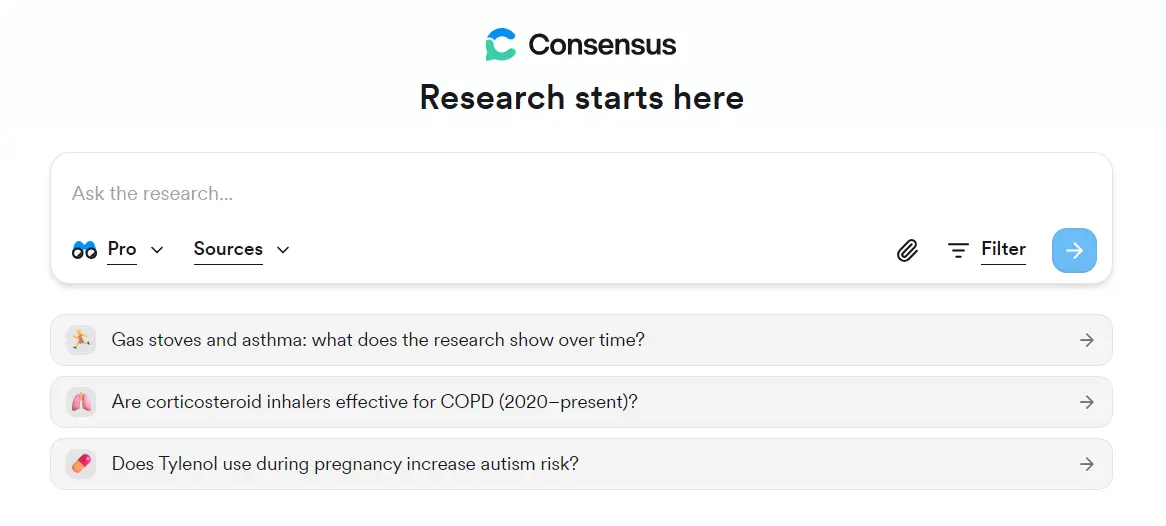
Consensus is specifically designed for academic research, and it’s one of the few AI for scientific papers tools I’ve tested that actually helps you find scholarly sources rather than fabricating them.
The tool searches academic databases and uses AI to summarize findings from peer-reviewed papers, showing you what actual research says about your topic. I won’t lie: I often use AI to summarize large PDFs when I need to make fast decisions, so this feature is one of my favorites. When I searched for information about the effectiveness of cognitive behavioral therapy, Consensus provided summaries of multiple studies with links to the actual papers.
My recommendation would be to use it to identify relevant sources and understand the landscape of research on your topic, but always read the actual papers before citing them.
Semantic Scholar
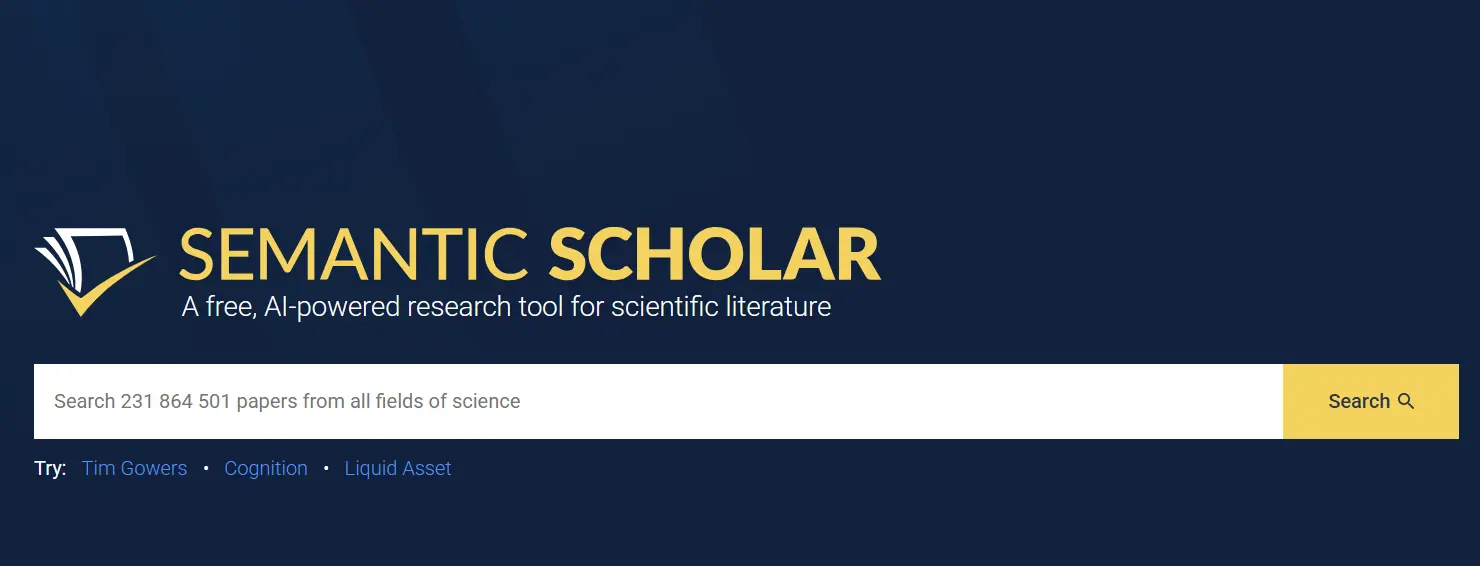
Semantic Scholar is an academic search engine, but it uses AI for writing research papers and other tasks. The platform indexes scholarly literature and uses algorithms to identify the most reputable papers and surface related research you might not find through keyword searching alone.
I consider Semantic Scholar to be one of the best AI for academic writing because it only indexes scholarly sources, such as peer-reviewed papers, conference proceedings, and academic publications. This eliminates the noise you get from Google Scholar, like random blog posts or unreliable websites.
Best AI for Editing and Clarity
Grammarly Premium
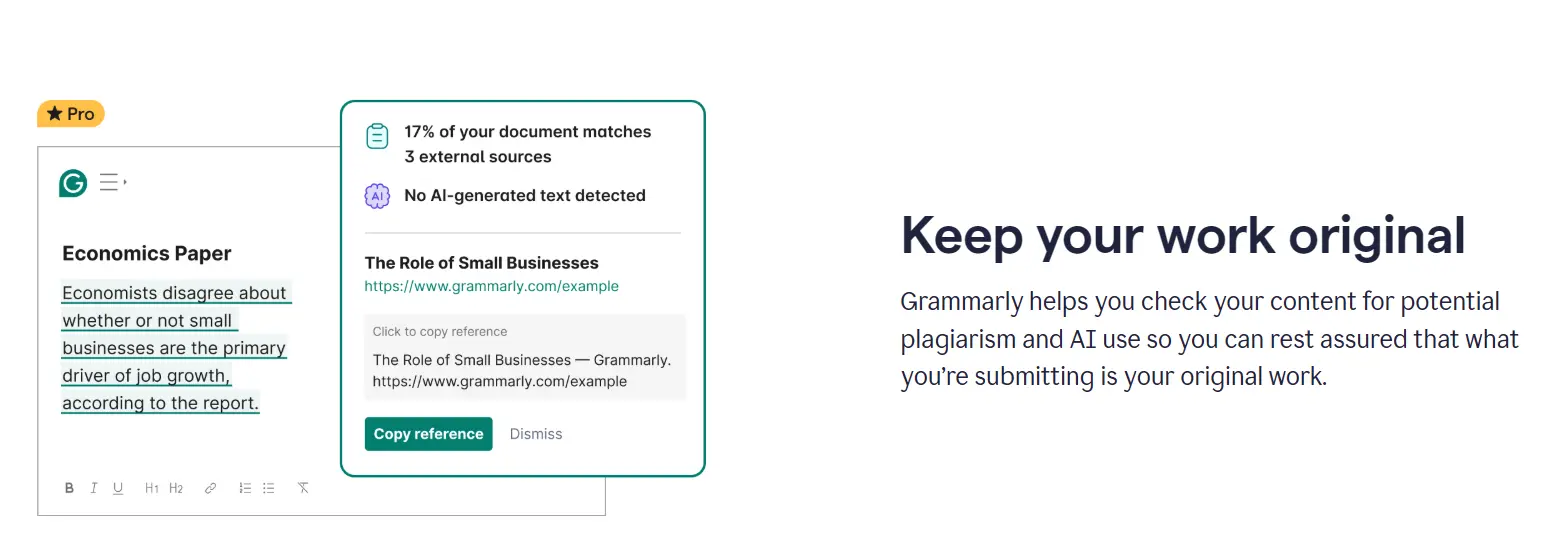
Grammarly has become nearly ubiquitous among students, and after extensive testing, I understand why it is one of the best AI to write a research paper.
The free version catches basic grammar and spelling mistakes, which is useful but limited. Grammarly Premium, which I tested extensively for academic writing, offers suggestions for clarity, conciseness, tone adjustment, and word choice that go beyond simple error correction.
I also enjoyed using Grammarly’s plagiarism checker (a Premium feature) to ensure my paraphrasing was sufficiently different from my sources and that I hadn’t accidentally reproduced phrasing from articles I’d read.
However, don’t blindly accept all of Grammarly’s suggestions. Sometimes it wants to change perfectly good academic phrasing into simpler language that loses nuance or precision. Review each suggestion and use your judgment about what actually improves your writing versus what just makes it different.
Tools to Avoid for Academic Writing
I also want to mention the tools that I cannot recommend for academic use. It’s not because they don’t work on a technical level, but because they encourage academic dishonesty and create serious risks for students.
Essay generators
I believe students should avoid using tools like MyEssayWriter.ai and similar platforms that promise to write assignments in minutes, as they are replacements for doing their own work. During testing, I found they generate shallow content with fabricated citations and generic arguments that professors can easily recognize as artificial.
“Submit-ready” tools
They claim their output is undetectable and requires no editing, which is particularly dangerous, especially for desperate students who think there’s no other option to avoid failing their assignments. I tested several of these tools and found their undetectable claims wildly inconsistent. Apart from academic integrity violations, the potential consequences of relying on AI to write research paper (failing courses, academic probation, expulsion) far outweigh any perceived time savings.
Can AI Be Used Ethically for Academic Writing?
I believe you can use the best AI for academic writing ethically only if you follow specific rules.
Rule #1. Responsible use
I’ve identified a clear line that I never cross: AI should help express and refine your ideas without generating the arguments for you.
Rule #2. Drafting vs submission
Here’s a critical distinction that many students miss: what you draft with AI assistance and what you submit as your final work need to be fundamentally different things. If you’re copying AI-generated paragraphs into your final submission, even with minor edits, you’ve crossed from drafting into dishonesty.
Rule #3. Institution policies
Before using the best AI for academic writing, check your institution’s policies, as some universities ban AI use for assignments entirely.
Rule #4. Editing and thinking matter
Using AI to bypass the development of critical thinking skills might get you through individual assignments, but it leaves you unprepared for exams and professional work.
AI vs Human Writing — Where AI Helps and Where It Fails
I guess it’s time to summarize all the cases I’ve mentioned on how to use artificial intelligence to write papers responsibly, so let’s do it.
Where AI helps:
- Brainstorming. AI can generate lists of potential directions, questions to consider, or frameworks to apply.
- Structure. AI tools can suggest organizational approaches for different types of academic writing.
- Rewriting. Effective tools can help you improve clarity and eliminate wordiness.
Where AI fails:
- Original analysis. Oftentimes, AI-generated analysis misses nuances and fails to make original connections between ideas.
- Critical thinking. AI cannot recognize contradictions or develop original insights because it predicts probable next words based on patterns in training data.
How to Choose the Best AI Tool for Your Academic Needs
If you want to use AI to help write research paper drafts, you can use my approach to evaluate which tools make sense for different scenarios.
- Your study level. According to my experience, undergraduate work sometimes benefits from structural guidance and clarity tools, while graduate-level research requires more sophisticated assistance with source management and complex argumentation.
- Type of assignment. For literature reviews, I rely on research assistance tools like Semantic Scholar and Consensus to identify relevant sources, but never use AI for creative or reflective assignments.
- Integrity rules. Always check what your course and institution actually permit.
- Language proficiency. For international students or anyone writing in a non-native language, AI tools can provide legitimate support that levels the playing field without crossing ethical lines.
Final Thoughts: Is There Really a “Best AI” for Academic Writing?
Most probably, we shouldn’t use terminology like ‘best’ or ‘worst’ when it comes to AI. What I can say without any doubt is that there are platforms that are appropriate or inappropriate for specific situations, which you can use in responsible or irresponsible ways.
The tools I’ve recommended in this review earned their places because they respect the fundamental purpose of academic assignments: developing your ability to research and communicate complex ideas effectively. What I’ve learned through extensive testing is that the most valuable AI tools are the ones that make you think harder, not the ones that let you think less.




 Built-in AI detector